
Known for its phones and emerging from nowhere in the segment, it might take on the scooter Goliaths.

'Revival is happening slowly.' 'But that is, if the pandemic is controlled.'

In a communication to the empowered committee on PLI recently, the Indian Cellular & Electronics Association (ICEA) has stated that except one player (Samsung), all the other eight players (which include vendors of Apple Inc) selected under the scheme were facing numerous challenges in fulfilling the qualification criteria.

If the data breach is found to be genuine, and if the company is found guilty on the grounds of dereliction of duty, or misleading the general public and the RBI about the data breach, actions taken against it will be severe, the person quoted above said.

Many people posted screenshots of the alleged MobiKwik user data, which, according to sources, was up for sale for 1.5 bitcoin or about $86,000.

As a tech services company, Ola has never been in hardcore manufacturing. And unlike in ride hailing, which is a two-player market (Uber is the only other competitor), in two-wheelers it faces many entrenched players. But most of all, rivals say Ola's targets are out of sync with most, even ambitious, projections.

There is a perception getting built inside the government that big technology companies -- a common term used for firms like Facebook, Google, Twitter, Amazon and the like - are becoming very powerful and present multiple threats to entire nations and their citizens today. The digital ecosystem is replete with CSAM (child sexual abuse material), fake news, drug trade, radicalisation, trolling among other social vices. Given the network effect that these platforms have, it is important to ensure that these platforms are not misused.

Disney-Star generated advertising revenue of over Rs 27 billion for IPL 2020.

Indian industry snubbed Google Play's decision to cut by half its commission for developers when they make $1 million in annual revenue for in-app purchases, saying the US tech giant may continue its "abrasive & monopolistic abuse" as it owns the Android system. Google Play said Tuesday that beginning July 1 it would slash its 30 per cent billing fee to 15 per cent for developers globally when they make the first $1 million of their annual revenue.

Italy may be the home of premium buffalo mozzarella cheese, but India could soon give the country a run for its money in this regard. India's largest dairy cooperative, Amul, has submitted a plan to the government, aiming to turn the country into a global hub for the export of mozzarella cheese made from buffalo milk, which is sold at a hefty premium around the world. Mozzarella cheese is one of the products identified by the government for support under its Rs 10,900 crore production-linked incentive scheme (PLI), to give a massive push to food processing exports as well as to build Indian food brands.
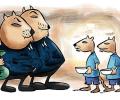
Individuals flew the flag for philanthropy in FY20, escalating their contribution significantly in comparison with company and foreign fund donations, according to the Dasra/Bain & Co India Philanthropy Report of 2021. Funding by individual philanthropists went up by 42 per cent from Rs 21,000 crore in FY19 to Rs 30,000 crore in FY20.
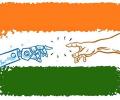
A majority of the companies said the law, aimed at jobs with a monthly salary cap of Rs 50,000, will result in them leaving Haryana or growing their operations in other states and abroad.

Experts have said the reservation provision will set unrealistic goals for organisational hiring, but will also reduce productivity by reducing the available talent pool to a few people within the state.
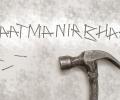
Recently, Prime Minister Narendra Modi met over 40 CEOs across broad swathes of industry, ranging from makers of mobile devices, auto components, food products to telecom networking equipment and pharmaceuticals. The agenda: To discuss how to make India an integral part of the global supply chain. The focus of the discussion would be the much touted yet not so well understood production-linked incentive scheme (PLI), the centrepiece of the government's drive to massively boost the manufacturing sector. To do so, the government has created a war chest of over Rs 197,000 crore to be paid out as incentives to over 14 industries in five years. There are three objectives to the scheme, two explicitly stated, one implied.

Zostel could get upwards of $600 million if arbitration goes through.

From Belarus to Bangladesh, authorities in 29 countries shut down or interfered with the internet at least 155 times in 2020.

Fresher hiring is expected to more than double compared to last year.

Over 10 Indian start-ups with total valuations of $84 billion (some are planning fresh fund-raising) are bracing to launch initial public offerings (IPOs) in the next 36 months. While the size of their IPOs is under discussion, estimates are that they would together raise a minimum of over $8-10 billion during the initial listing.

Several factors have held India back. One is DoT policy somersaults and lack of clarity on whether to or not to ban Chinese gear makers.

Online travel portals and airlines say the demand from companies is being led by essential services sectors like pharmaceutical, oil and gas, and power.
 © 2026 Rediff.com - Advertise with us - Disclaimer - Privacy Policy - Sitemap - Feedback - About us - Terms of use - Grievances